With the spread of convenience stores, packaged snack foods are now a significant business. Snack foods are typically designed to be portable, quick and satisfying. Processed snack foods are designed to be less perishable, more durable, and more portable than prepared foods. They often contain substantial amounts of sweeteners, preservatives, and appealing ingredients such as chocolate, peanuts, and specially-designed flavors (such as flavored potato chips). A snack eaten shortly before going to bed or during the night may be called a midnight snack.
Tuesday, May 29, 2012
snack food, ingredients commonly available in the home, to be big industrial food
With the spread of convenience stores, packaged snack foods are now a significant business. Snack foods are typically designed to be portable, quick and satisfying. Processed snack foods are designed to be less perishable, more durable, and more portable than prepared foods. They often contain substantial amounts of sweeteners, preservatives, and appealing ingredients such as chocolate, peanuts, and specially-designed flavors (such as flavored potato chips). A snack eaten shortly before going to bed or during the night may be called a midnight snack.

Thursday, May 24, 2012
turmeric, as a brand, it can be a standardized herbal medicine, as drugs are cheap and easily available,
turmeric, as a brand, it can be a standardized herbal medicine, as drugs are cheap and easily available,
Finished materials products from extracts of turmeric dietary supplements in capsule form (Vitamin-plus) market and the industry is evolving. Dietary supplements are made from raw materials with additives of turmeric extract vitamins B1, B2, B6, B12, Vitamin E, Lecithin, Amprotab, Mg-stearate, and Kolidon Nepagin 90.
Turmeric is also used as an anti-itch, anti-septic and anti-spasm and reduce swelling of the mucous membranes of the mouth. Turmeric juice is consumed in the form of called the filtrate, as well as extracts taken or used as an ointment for treating swelling and sprains. Turmeric is also believed to cure a stuffy nose, how to burn the turmeric and breathe it.
A simple way is:
Take a handful of saffron, and then peeled
Grate or juice in a blender (regular water added to taste)
Boil 2-3 times (usually marked by expansion)
Add a little salt (tip of a spoon)
Strain and Squeeze
Pour lime juice (1-3 seeds, to taste)
Add sugar or honey
Drink (preferably in a warm state)
Above is also very effective herb to cure the flu / fever in pregnant mothers (no need to do every day, usually 1-2 days was able to recover), so avoid the use of chemical drugs that can harm the fetus. When consumed by pregnant women, infants born to be trusted to be clean of fats that are often attached to / covering the entire body of the baby.
The use of turmeric instant, should not be done for treatment (particularly for pregnant women), because there are others that the contents may be harmful to the content of the drug mainly preservatives and dyes.
The main content of turmeric is curcumin and essential oil that works for the treatment of hepatitis, antioxidants, digestive disorders, anti-microbial, anti cholesterol, anti-HIV, anti-tumor (induces apostosis), inhibits growth of breast tumor cells, inhibits tumor cell ploriferasi the colon, anti invasion, anti-rheumatoid arthritis (rheumatism). Diabetes mellitus, Typhus, Appendicitis, dysentery, hospital discharge; Menstruation is not smooth, stomach pains during menstruation, breast Streamlining; tonsils, mucous stools, Morbili, Cangkrang (Waterproken).
Turmeric has a bright prospect in the downstream sector in various forms such as extracts, oils, starch, food / beverage, cosmetics, pharmaceutical products and IKOT / IOT.
Turmeric contains medicinal compounds, called curcuminoid consisting of curcumin, desmetoksikumin bisdesmetoksikurkumin 10% and as much as 1-5%, and other beneficial substances such as essential oils are composed of sesquiterpene ketones, turmeron, tumeon 60%, 25% Zingiberen , felandren, sabinen, borneol and sineil. Turmeric also contains as much as 1 -3% fats, carbohydrates as much as 3%, Protein 30%, Starch 8%, Vitamin C 45-55%, and mineral salts, namely iron, phosphorus, and calcium.
ice cream, anyone who finds, to whom made
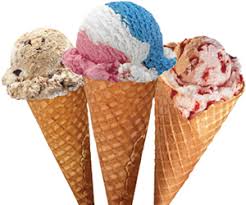
Ice cream
Most varieties contain sugar, although some are made with other sweeteners. Formerly and properly ice-cream, derived from earlier iced cream or cream ice, is a frozen dessert usually made from dairy products, such as milk and cream, and often combined with fruits or other ingredients and flavours. In some cases, artificial flavourings and colourings are used in addition to, or instead of, the natural ingredients. The mixture of chosen ingredients is stirred slowly while cooling, in order to incorporate air and to prevent large ice crystals from forming. The result is a smoothly textured semi-solid foam that is malleable and can be scooped.
 The meaning of the phrase "ice cream" varies from one country to another. Phrases such as "frozen custard", "frozen yogurt", "sorbet", "gelato" and others are used to distinguish different varieties and styles. In some countries, such as the USA, the phrase "ice cream" applies only to a specific variety, and most governments regulate the commercial use of the various terms according to the relative quantities of the main ingredients. In other countries, such as Italy and Argentina, one word is used for all variants. Analogues made from dairy alternatives, such as goat's or sheep's milk, or milk substitutes, are available for those who are lactose intolerant, allergic to dairy protein, and/or vegan. The most popular flavors of ice cream are vanilla and chocolate.
Snow would either be saved in the cool-keeping underground chambers known as "yakhchal", or taken from snowfall that remained at the top of mountains by the summer capital — Hagmatana, Ecbatana or Hamedan of today.
In the Persian Empire, people would pour grape-juice concentrate over snow, in a bowl, and eat this as a treat, especially when the weather was hot. In 400 BC, the Persians went further and invented a special chilled food, made of rose water and vermicelli, which was served to royalty during summers. The ice was mixed with saffron, fruits, and various other flavours.
 Ancient civilizations have served ice for cold foods for thousands of years. The BBC reports that a frozen mixture of milk and rice was used in China around 200 BC.nThe Roman Emperor Nero (37–68) had ice brought from the mountains and combined it with fruit toppings. These were some early chilled delicacies.
Arabs were perhaps the first to use milk as a major ingredient in the production of ice cream. They sweetened it with sugar rather than fruit juices, and perfected means of commercial production. As early as the 10th century, ice cream was widespread among many of the Arab world's major cities, such as Baghdad, Damascus, and Cairo. It was produced from milk or cream, often with some yoghurt, and was flavoured with rosewater, dried fruits and nuts. It is believed that the recipe was based on older Ancient Arabian recipes, which were, it is presumed, the first and precursors to Persian faloodeh.
Maguelonne Toussaint-Samat asserts, in her History of Food, that "the Chinese may be credited with inventing a device to make sorbets and ice cream. They poured a mixture of snow and saltpetre over the exteriors of containers filled with syrup, for, in the same way as salt raises the boiling-point of water, it lowers the freezing-point to below zero." Some distorted accounts claim that in the age of Emperor Yingzong, Song Dynasty (960-1279 A.D.) of China, a poem named (Ode to the ice cheese) was written by the poet Yang Wanli. Actually, this poem was named "Ode to the pastry; is a kind of food much like pastry in the Western world) and has nothing to do with ice cream. It has also been claimed that, in the Yuan Dynasty, Kublai Khan enjoyed ice cream and kept it a royal secret until Marco Polo visited China and took the technique of making ice cream to Italy.
Most varieties contain sugar, although some are made with other sweeteners. Formerly and properly ice-cream, derived from earlier iced cream or cream ice, is a frozen dessert usually made from dairy products, such as milk and cream, and often combined with fruits or other ingredients and flavours. In some cases, artificial flavourings and colourings are used in addition to, or instead of, the natural ingredients. The mixture of chosen ingredients is stirred slowly while cooling, in order to incorporate air and to prevent large ice crystals from forming. The result is a smoothly textured semi-solid foam that is malleable and can be scooped.
Snow would either be saved in the cool-keeping underground chambers known as "yakhchal", or taken from snowfall that remained at the top of mountains by the summer capital — Hagmatana, Ecbatana or Hamedan of today.
In the Persian Empire, people would pour grape-juice concentrate over snow, in a bowl, and eat this as a treat, especially when the weather was hot. In 400 BC, the Persians went further and invented a special chilled food, made of rose water and vermicelli, which was served to royalty during summers. The ice was mixed with saffron, fruits, and various other flavours.
Arabs were perhaps the first to use milk as a major ingredient in the production of ice cream. They sweetened it with sugar rather than fruit juices, and perfected means of commercial production. As early as the 10th century, ice cream was widespread among many of the Arab world's major cities, such as Baghdad, Damascus, and Cairo. It was produced from milk or cream, often with some yoghurt, and was flavoured with rosewater, dried fruits and nuts. It is believed that the recipe was based on older Ancient Arabian recipes, which were, it is presumed, the first and precursors to Persian faloodeh.
Maguelonne Toussaint-Samat asserts, in her History of Food, that "the Chinese may be credited with inventing a device to make sorbets and ice cream. They poured a mixture of snow and saltpetre over the exteriors of containers filled with syrup, for, in the same way as salt raises the boiling-point of water, it lowers the freezing-point to below zero." Some distorted accounts claim that in the age of Emperor Yingzong, Song Dynasty (960-1279 A.D.) of China, a poem named (Ode to the ice cheese) was written by the poet Yang Wanli. Actually, this poem was named "Ode to the pastry; is a kind of food much like pastry in the Western world) and has nothing to do with ice cream. It has also been claimed that, in the Yuan Dynasty, Kublai Khan enjoyed ice cream and kept it a royal secret until Marco Polo visited China and took the technique of making ice cream to Italy.
Tuesday, March 20, 2012
what BRANDS ?
what brand ?


started early in the morning , every life , you, me and
all of us, always and often use the brand , and it is done continuously ,
always use the word " brand " it ,
from waking up from a deep sleep , we use a towel to
accompany us to the bathroom , if the brand name has stuck in there ? yeah ....
we all realize that our lives do not always wear brand , yes I wear "
Chortex " towel bathroom , bathtub listed " Toto " brand , very
light lay in it .

I rub my entire body with soap " LUX " or
" Camay " wow brand ... sweet , fragrant and cool , apply a little on
the skin , moisturize " Ollay "
Do not forget to brush your teeth with a toothbrush
" Pepsodent " and his pasta , tha’s okay, out of the shower ..... ready .... what your
activities today ... ? to entered the dressing room , wearing a shirt "
Pierre Cardin " brand names and famous , clothes " Crocodile " ,
long pants " Lanvin " be a decoration on the neck tie " Dolce
& Gabbana " , , a pair of socks " Emperio Armani " and shoes
" crocodile " ...... spray into your fashion " Hugo Boss "
for men , and for women " Bvlgari " wearing a wat

wearing watch on his left hand
" Rolex " and the gold bracelet " Swarovski Crystal ", also
tucked into a pocket handkerchief " Carvil " inside “Master” credit card
and “HSBC” bank card
sound of the phone ringing from " BlackBerry
" in the right hand and the other " Ipad " , comes a very cool
dining chamber , because “AC Denko” , for breakfast with a drink " Orange
"
No available breakfast cereals " Quaker "
famous trademark , the porcelain plates " Wallace " trademark logo ,
flatware " Innovation News " on the mark , use knife " Deluxe in
Use"
We hurriedly ate bread " breadyONE " and
butter " Blueband " , drink " Ceylon Tea " and take it
" Coca - Cola " bottle from “LG refrigerator” , we leave behind a set
of furniture " Minotti " brand , do not forget to turn off the lights
" Phillips " , what “Toshiba TV” and audio stereoset " Samsung
" must in turn also ,
glasses lying on the table " Ray - Ban " ,
stepped into the garage above the tile " Eszensa " ,

start the one car
the " Mercedes - Benz " and the others “Jeep” , turn on the stereo
radio " Sony " ....... my boy always touring this motorcyle " Harley
Davidson " and for riding the round of city with " Honda Scoopy"
and all my family for traveling , take the " BMW serie X5 "
my girls going to ride bike to school with "
Motachie ".
brand enough to use ..... for all life ........ whats
next .... with the Brand ?
Subscribe to:
Posts (Atom)